Introduction
The Indian Income Tax system is regularly updated to simplify compliance, improve transparency, and encourage financial discipline. Every year, the Government introduces important changes through the Union Budget and official notifications. Staying informed about these updates helps taxpayers plan better, reduce tax burden legally, and avoid penalties. In this article, we explain the most important new income tax changes that every individual and business taxpayer in India should know.
New Tax Regime Updates and Structure
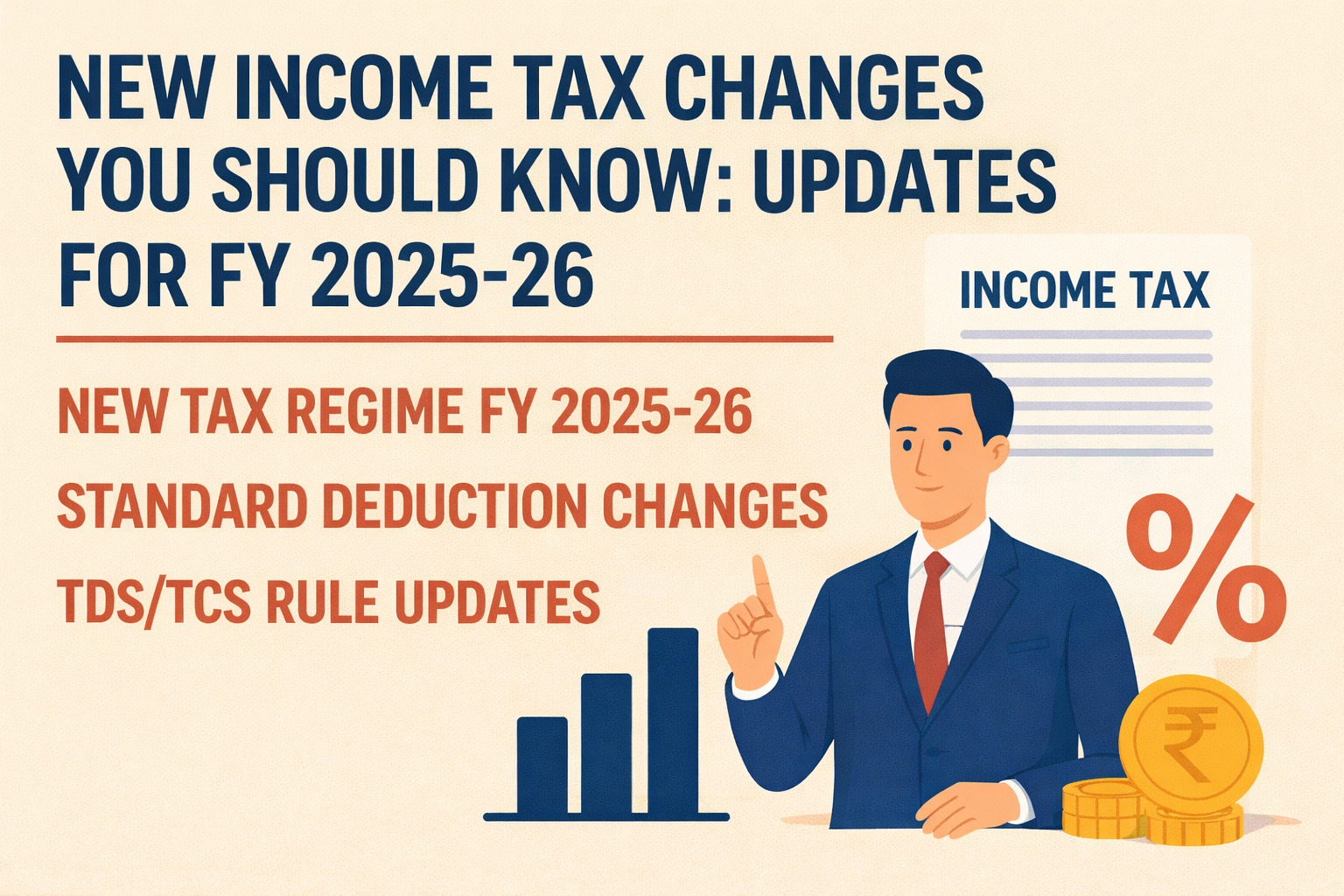
One of the most significant reforms in recent years is the introduction and promotion of the New Tax Regime. Under this system, taxpayers can enjoy lower slab rates but must forgo most exemptions and deductions. The government has further simplified this regime by adjusting slab limits, increasing rebate thresholds, and making it the default option unless the taxpayer chooses otherwise. This change aims to simplify return filing and make taxation more transparent for salaried individuals and small business owners.
Standard Deduction and Rebate Enhancements
Recent income tax updates have provided relief to middle-class taxpayers through increased standard deductions and enhanced rebate limits. These changes reduce taxable income, making tax payments more manageable. The higher rebate threshold ensures that individuals with lower income enjoy complete tax exemption, offering financial relief and supporting household savings.
TDS and TCS Rule Modifications
The government has introduced several changes in Tax Deducted at Source (TDS) and Tax Collected at Source (TCS) provisions to improve tax compliance and tracking. New reporting requirements, updated thresholds, and higher rates for non-filers aim to increase transparency and discourage tax evasion. These updates impact professionals, businesses, freelancers, and investors across India.
Capital Gains Tax Updates
Capital gains taxation has also seen important changes, particularly in relation to property transactions, equity investments, and digital assets. Revised holding periods, tax rates, and reporting norms ensure better compliance and accurate tax assessment. Understanding these changes helps investors and property owners plan their transactions efficiently and minimize tax liability.
Faceless Assessment and Digital Compliance
To increase transparency and reduce manual interference, the Income Tax Department has expanded faceless assessment, appeal, and penalty systems. This digital transformation ensures fair tax administration, faster resolution of cases, and reduced harassment. Online portals, pre-filled returns, and automated notices have simplified compliance for taxpayers across India.
Impact on Salaried Individuals and Small Businesses
The latest tax reforms aim to benefit salaried individuals, freelancers, and small business owners by simplifying procedures and reducing compliance burden. Lower tax rates, simplified returns, and digital processes help taxpayers save time, reduce errors, and plan finances more efficiently.
Conclusion
Keeping up with the latest income tax changes is essential for smart financial planning and legal tax saving. Understanding new rules helps individuals and businesses stay compliant, avoid penalties, and make informed financial decisions. Professional tax advisory ensures that taxpayers take full advantage of available benefits while remaining fully compliant with Indian tax laws.